
Prepare for the McKinsey Solve with confidence.
Practice tests built from real past PSG data — covering every live 2026 scenario. The fastest path from invitation to offer.
Redrock · Sea Wolf · SFL
Every live 2026 PSG scenario, fully covered.
Practice on the real thing
Interactive simulations mirroring the exact format, timing, and question types of the live McKinsey PSG.
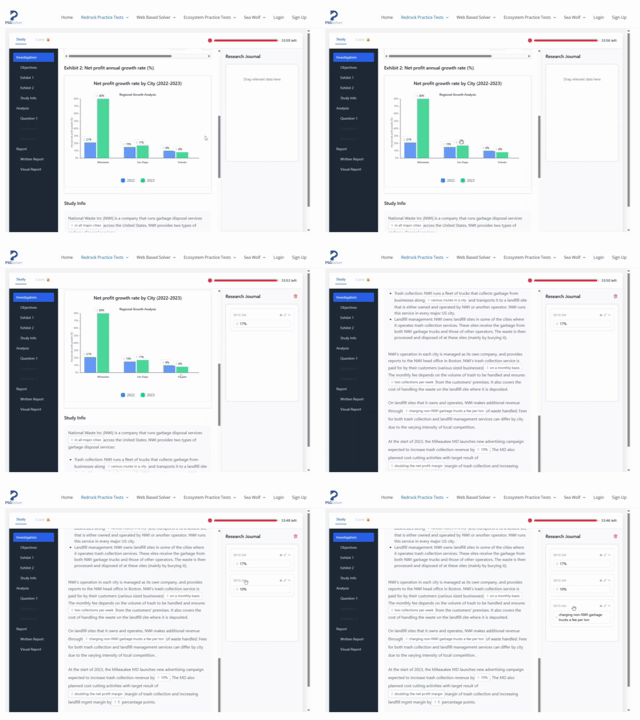
Redrock Study Task
Work through a structured research report answering percentage calculations, comparisons, and logical inferences. Wrong answers may incur deductions — precision counts.
- 3 full-length simulations with real PSG-style data
- Detailed answer explanations for every question
- Timed conditions matching the live assessment
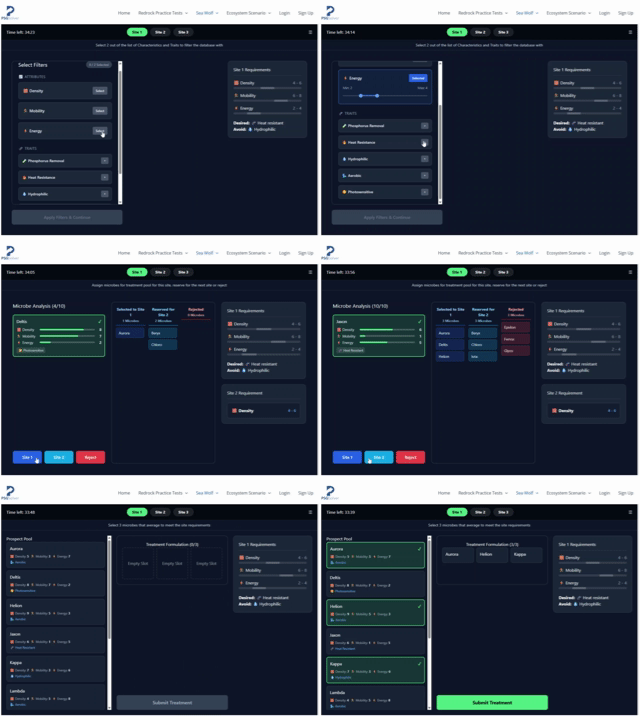
Sea Wolf — Ocean Cleanup
Design microbial treatments for 3 ocean sites across 3 rounds. Parameters shift each round — adaptability and systematic elimination matter as much as logic.
- 10 simulations — the most practice of any provider
- All microbe combinations and site conditions covered
- Strategy guide for shifting parameters
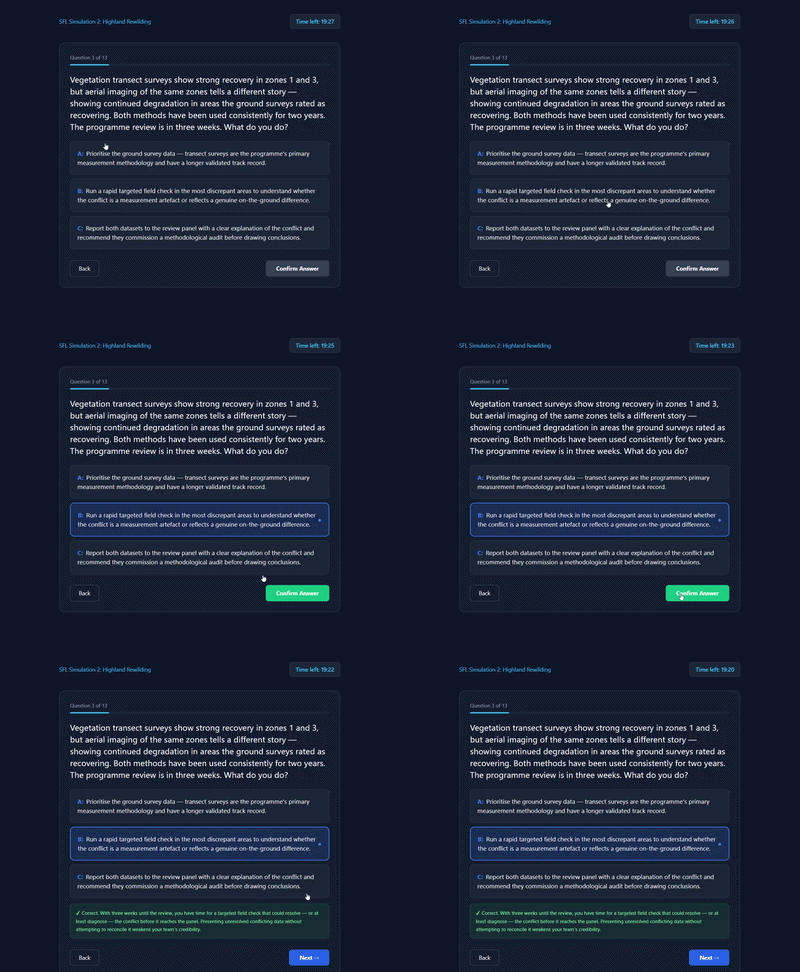
Sustainable Futures Lab
13 sequential decisions under time pressure — no calculations. McKinsey scores you on prioritisation, interpretation, trade-off balance, decision-making, and teamwork.
- 5 simulations covering all 5 scored dimensions
- Breakdowns showing how each answer is scored
- Currently live in US, UK, Germany, Middle East & more
Three reasons candidates pick us.
Built specifically for the 2026 McKinsey Solve assessment — including the new Sustainable Futures Lab module.
Practise on real data
Get maximum results in minimum time with practice tests modelled directly on real past PSG data.
Gain the advantage
Build the speed and accuracy to handle every scenario under exam conditions.
Land your dream job
Take yourself one step closer to a $100k+ offer at McKinsey & Company — and the career it unlocks.
Trusted by candidates from top universities.
















Pick the package that fits your assessment.
Every package includes instant access, real past PSG data, and exact game replication.
- 3 × Redrock tests with solutions
- 10 × Sea Wolf tests with solutions
- 5 × SFL simulations with solutions
- 3 × Redrock tests with solutions
- 10 × Sea Wolf tests with solutions
- 5 × SFL simulations with solutions
- 3 × Ecosystem practice tests
- 3 × Redrock tests with solutions
- 10 × Sea Wolf tests with solutions
- Real past PSG data
- Instant access
The McKinsey Problem Solving Game, explained.
The McKinsey Problem Solving Game (PSG), part of the broader Solve assessment, is a simulation-based test designed to evaluate critical thinking and complex problem-solving skills. McKinsey & Company uses it during recruitment to identify candidates with the analytical mindset to succeed in consulting.
The 2026 version focuses on three live scenarios: Redrock Study Task, Sea Wolf, and the new Sustainable Futures Lab. Candidates receive either a 65-minute or 85-minute version depending on their region and role.
Explore each scenario →Every scenario, fully covered.
We provide practice material and worked explanations for every live module in the 2026 McKinsey Solve assessment.
Redrock Study Task
The first scenario in the 2026 assessment. You read a structured report and answer math-style questions based on its data. Similar in spirit to the legacy McKinsey PST — incorrect answers may incur deductions, so accuracy matters.
More info →Sea Wolf (Ocean Cleanup)
Introduced in spring 2024. You design microbial treatments for three ocean sites, matching each site’s ideal characteristics with a combination of three microbes. Played three times with different parameters — strategic alignment is everything.
More info →Sustainable Futures Lab
The newest module, added to the 85-minute Solve assessment. A behavioural assessment where you join an environmental research team and make 13 sequential decisions under time pressure — testing prioritisation, judgement, and teamwork.
More info →Ecosystem Builder
Build and maintain a sustainable ecosystem by balancing environmental conditions and predator-prey relationships. Largely replaced by Sea Wolf in 2024, but still assigned to some candidates — check your invitation. Three full practice tests are available on their own or in the Ultimate Bundle.
More info →Older scenarios
Pre-February 2023 PSG variants — included for reference.
Plant Defense
Defend a plant from pests and diseases by selecting treatments and minimising impact on the surrounding ecosystem. Tests critical thinking, complex analysis, and decision-making under pressure.
Disease Diagnosis
Identify and diagnose an unknown disease affecting an animal population using a vast amount of data, then propose a treatment plan grounded in comprehensive analysis.
Disaster Identification
Identify the type of natural disaster causing animal deaths, then select a suitable relocation site for the surviving population — based on the same data-rich workflow as Ecosystem Building.
Ready to prepare for the McKinsey PSG?
Join 825+ candidates who used PSG Solver to walk into their assessment with confidence.
View Packages →