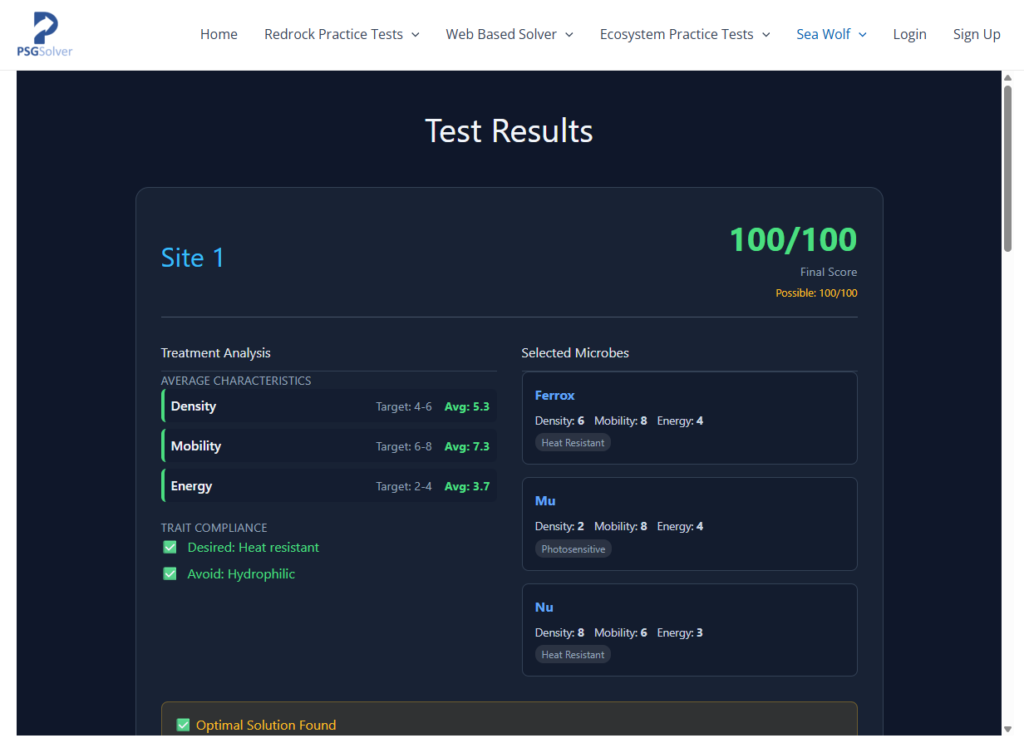
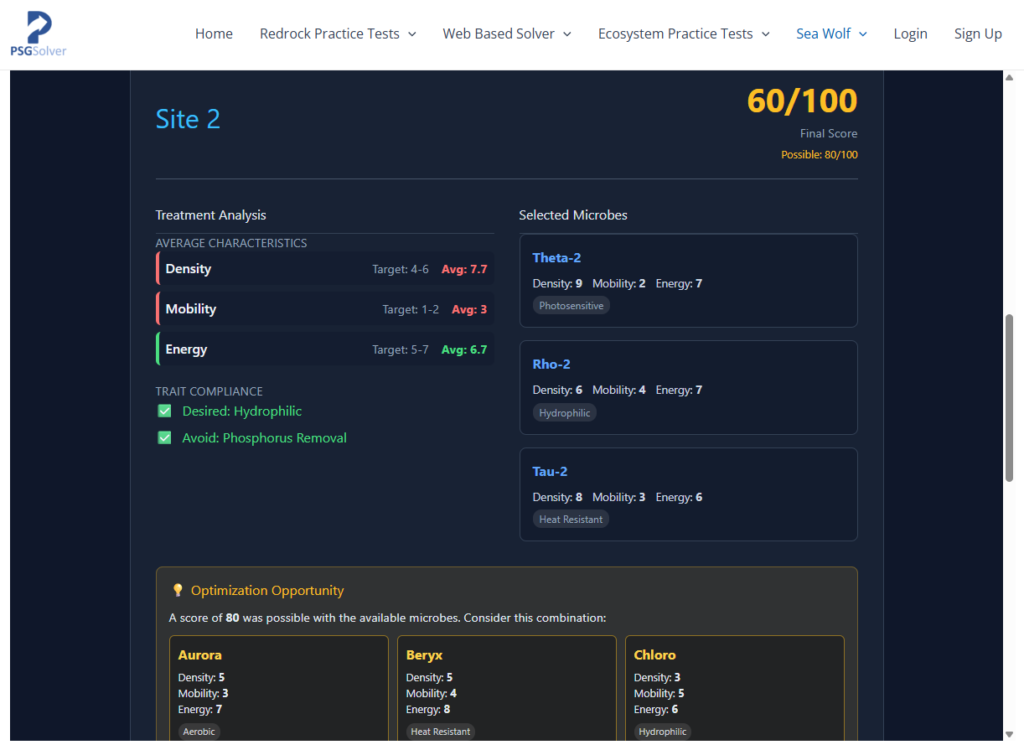
What is Sea Wolf Game?
Launched by McKinsey & Company in 2024, the Sea Wolf Game is the latest addition to the McKinsey Problem Solving Game series. Also known as the McKinsey Ocean Treatment Game or McKinsey Ocean Cleanup, it asks candidates to rehabilitate polluted ocean ecosystems by carefully selecting microbial species that can reduce contamination.
The main goal is to design effective treatments for three separate ocean sites, each with its own specific requirements. For every site, you follow a structured selection process to choose a group of three microbes. Success depends on aligning their combined characteristics as closely as possible with the environmental conditions of the site.

Key Details of the Game
- Time Limit: 35 minutes to complete all three sites
- Game Sequence: The Sea Wolf Game comes after Ecosystem Scenario and/or Redrock Study within the Mckinsey Solve Game sequence
How the Sea Wolf Game Works
The challenge centres on assembling the optimal trio of microbes for each ocean site. Every site has distinct characteristic requirements, and each microbe possesses a specific set of attributes and traits that determine its effectiveness.
To successfully treat a site, your selected group of three microbes must satisfy all of the following conditions:
- The average value of each numerical attribute (calculated across all three microbes) must fall within the site’s specified target range
- The undesirable trait must be absent from all three microbes
- The desirable trait must be present in at least one of the three microbes
This process is repeated for each of the three ocean sites, with a the option to carry over microbes from one site to the next.
Core Concepts and Definitions
1. Characteristics
Both ocean sites and microbes are defined by two categories of characteristics:
- Attributes:
Three numerical values ranging from 1 to 10 that represent measurable properties such as permeability, density, or energy. For example, a microbe might have a permeability score of 7. - Traits:
Four binary (yes/no) traits indicating whether a specific feature is present. If present, the trait may be classified as either desirable or undesirable. Examples include photosensitivity, aerobic capability, or heat resistance.
2. Site Requirements
Each ocean site includes clearly defined criteria that determine whether a treatment is effective:
- A target range for each of the three numerical attributes (for example, density between 6 and 8)
- One desirable trait
- One undesirable trait that must be avoided
Important: Not all traits are always displayed. In some cases, a site may show only a desirable trait without specifying an undesirable one. In others, both a desirable and an undesirable trait may be presented. There are three sites in each game, and each site can feature a different combination of traits.
3. Microbes
In the game, each microbe profile includes:
- Three numerical attributes (scored from 1 to 10)
- One binary trait, which is either present or absent
These characteristics determine how suitable a microbe is for meeting a site’s treatment requirements.
4. Gameplay Components
- Microbe Database:
The full collection of microbes available within the game. All candidate options are drawn from this master set. - Prospect Pool:
At the start of each round, you receive a random selection of 10 microbes from the database. This is the group you must choose from. - Treatment Microbes:
From the prospect pool, you will select a final team of three microbes to deploy at a specific ocean site.
5. Scoring Structure
Your treatment’s performance is evaluated based on the combined attributes and traits of the three selected microbes compared to the site’s requirements.
Effectiveness is graded on a scale of 0–100%, with the following weighting:
- 60% — All three attribute averages fall within the required target ranges (20% per attribute)
- 20% — At least one selected microbe contains the desirable trait
- 20% — None of the selected microbes possess the undesirable trait
Note: Achieving a full 100% score is not always guaranteed, as it depends on the specific microbes available in the prospect pool for that round.
Step-by-step Sea Wolf Guide
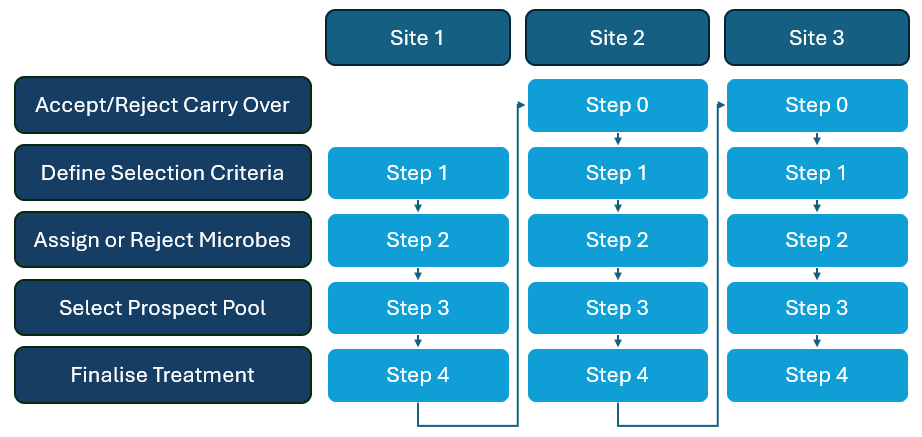
The flow of the assessment is shown below:
Step 1: Set Initial Filtering Criteria
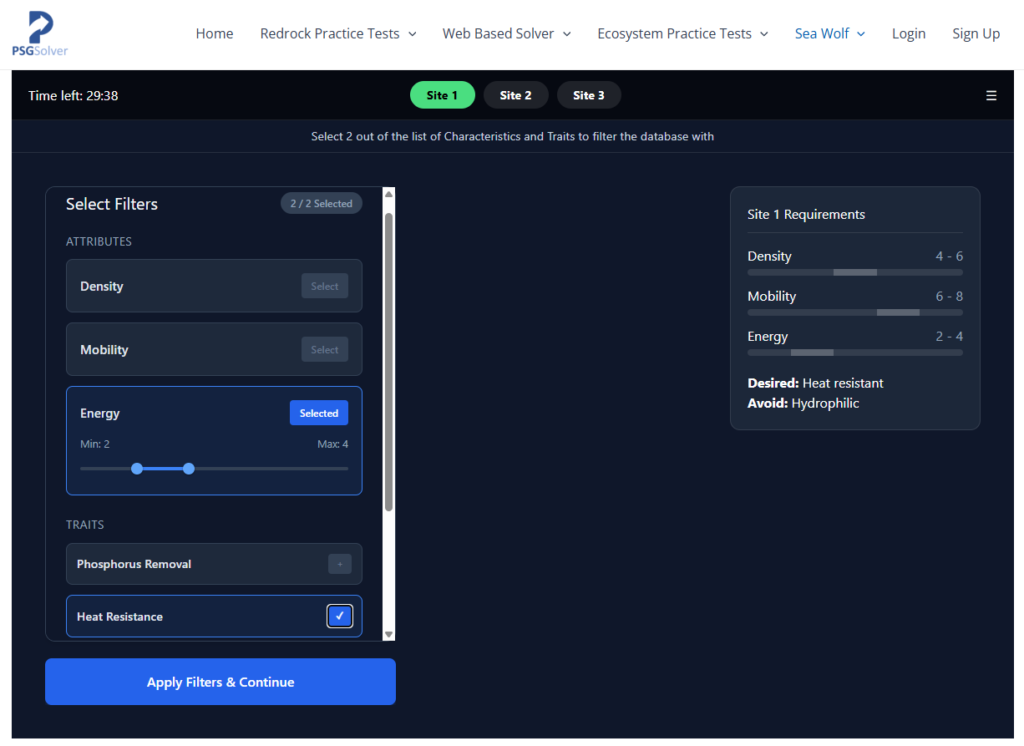
At the start of each round, you must choose two characteristics—either attributes or traits—to filter the available microbes.
- If you choose an attribute, you’ll define a numerical range using two values (for example, 6 to 8).
- If you choose a trait, you’ll activate the specific trait you want included.
These filters are used only to generate the initial pool of microbes. They do not restrict or affect your final treatment selection in later stages.
Tips for setting effective filters:
- Select one attribute and one trait for balance.
- Choose an attribute with a target range that is clearly high or low (farther from the midpoint of 5.5). This makes it easier to exclude microbes outside the desired range.
- Select a trait that aligns with the site’s requirements.
- If both a desirable and undesirable trait are shown, prioritize the desirable trait, since including it in at least one microbe contributes directly to your score.
This structured filtering approach reflects McKinsey’s emphasis on narrowing options early through focused criteria.
Step 2: Assign or Reject Microbes
After applying your filters, you will receive a prospect pool of 10 microbes. Each microbe includes:
- Three numerical attributes (such as permeability, mobility, and energy)
- One trait
Your task is to review each microbe and decide whether to:
- Assign it to the current site
- Assign it to the next site
- Reject it entirely
Repeat this evaluation process for all 10 microbes, using the site’s requirements as your guide.
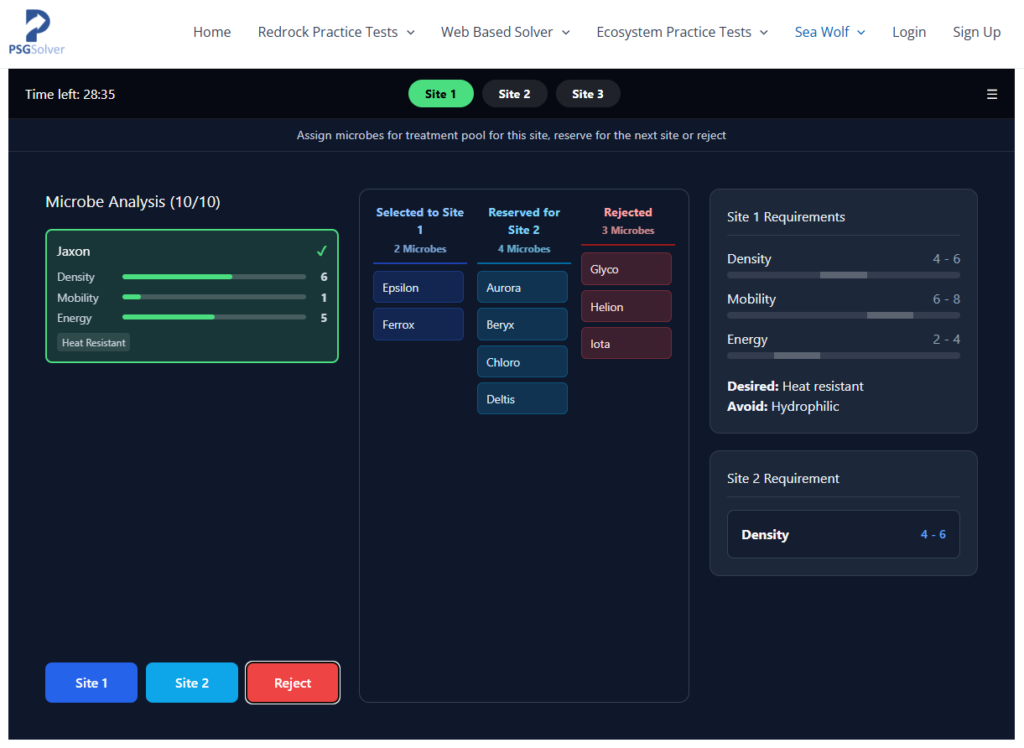
Guidelines for assigning microbes:
A microbe is generally a strong match if:
- At least two of its three attributes fall within the site’s required ranges
- It includes the desirable trait
- It does not include the undesirable trait
If a microbe fails to meet the criteria for either site, reject it.
Keep in mind that ideal matches may not always be available. Prioritize microbes that satisfy the greatest number of requirements—especially those that avoid the undesirable trait.
Step 3: Build the Prospect Pool
In this phase, you start with a partially pre-selected group of microbes. You will also see rotating sets of three new microbes. From each set, choose one microbe to add to your pool. Continue this process until your prospect pool reaches 10 microbes.
As before, each microbe displays:
- Three numerical attributes
- One trait, which may be desirable, undesirable, or neutral depending on the site
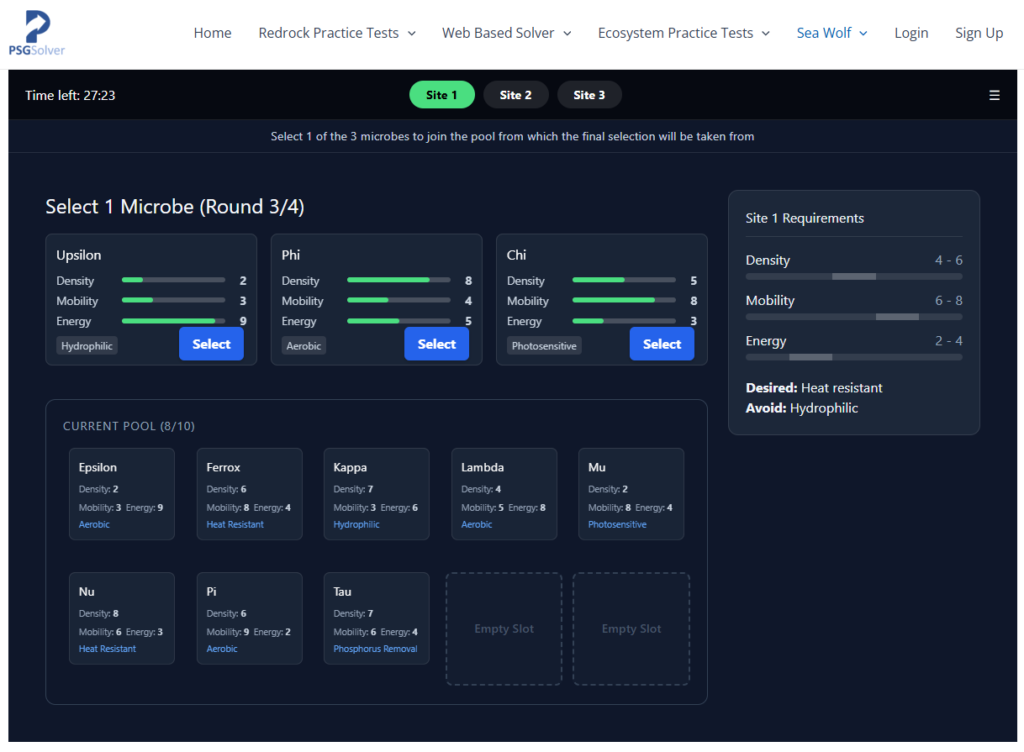
Tips for building a strong pool:
- Avoid microbes with the site’s undesirable trait
- Prioritize those meeting at least two attribute requirements
- Include the desirable trait whenever possible
- Keep the full set of site requirements in mind throughout
Your objective is to assemble a pool that provides strong options for forming a high-scoring treatment team in the final step.
Step 4: Select the Final Three Microbes
In the final stage, you will choose three microbes from your 10-microbe pool to create the treatment team for the site.
Your goal is to maximize your treatment score (out of 100%). Carefully assess both attributes and traits before making your selection.
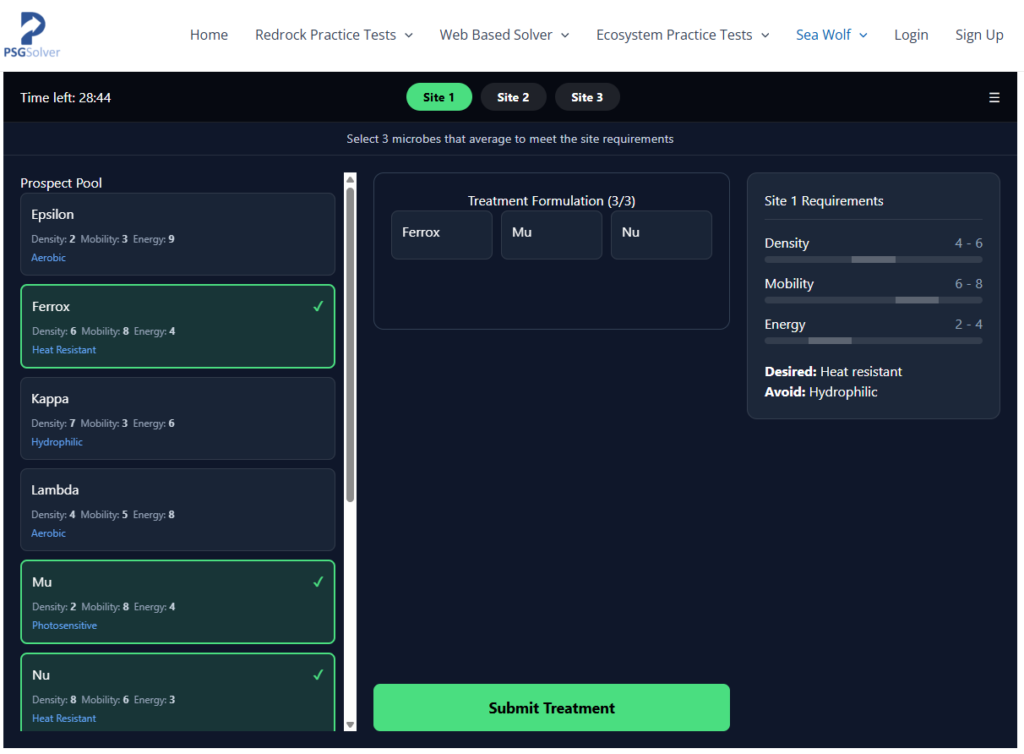
Selection tips:
- Ensure the average attribute values fall within the site’s required ranges
- Exclude any microbe with the undesirable trait
- Include at least one microbe with the desirable trait
- If a perfect combination isn’t available, choose the option that comes closest to meeting all criteria
Refer to the scoring breakdown for a reminder of how points are allocated.
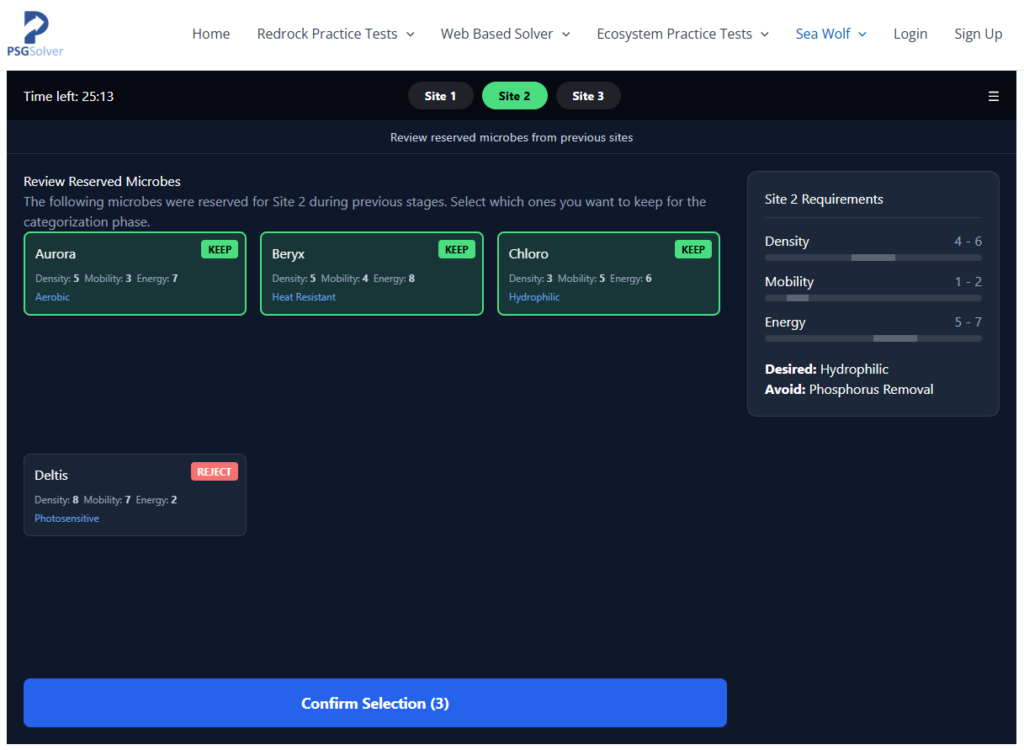
Once your team is finalized, the game proceeds to the next ocean site. There is then a mini step that shows the user the full site information for the next site and gives them the opportunity to change their selection.
Step ‘0’: Confirm Carry Over Microbes
In this phase, you are given the microbes set that you pre-selected for the next site in Step 2, along with the entire site information. Its important here to reject any microbes with undesirable traits and any that with attributes that are significantly different too the site targets.
Scoring and Feedback
Our practice tests offer comprehensive scoring and feedback to help you learn, improve and ace your Mckinsey PSG test.