

McKinsey PSG 2026: What’s Changed (And How to Prepare)
The McKinsey Problem Solving Game has changed significantly for 2026. Here’s exactly what’s new, what’s been retired, and how to make sure you’re preparing for the right version.
If you’ve been researching the McKinsey Problem Solving Game (PSG), you may have noticed that information online is inconsistent. Some guides describe scenarios that are no longer used. Others don’t mention modules that are now live. This post cuts through the confusion and explains exactly what the 2026 PSG looks like — and what’s changed.
What is the McKinsey PSG?
The McKinsey Problem Solving Game (also called McKinsey Solve) is a simulation-based assessment used by McKinsey & Company during recruitment. Unlike a traditional test, it presents candidates with interactive game-like scenarios designed to measure cognitive flexibility, data processing, and decision-making under time pressure.
It’s taken online, typically before or during the first round of interviews, and results carry significant weight in the hiring decision.
The 2026 PSG: Two Versions
In 2026, McKinsey runs two versions depending on your region and role: a 65-minute version (two scenarios) and an 85-minute version (three scenarios). The extra 20 minutes accommodates the new Sustainable Futures Lab module.
The Three Live Scenarios in 2026
1. Redrock Study Task
Redrock Study Task
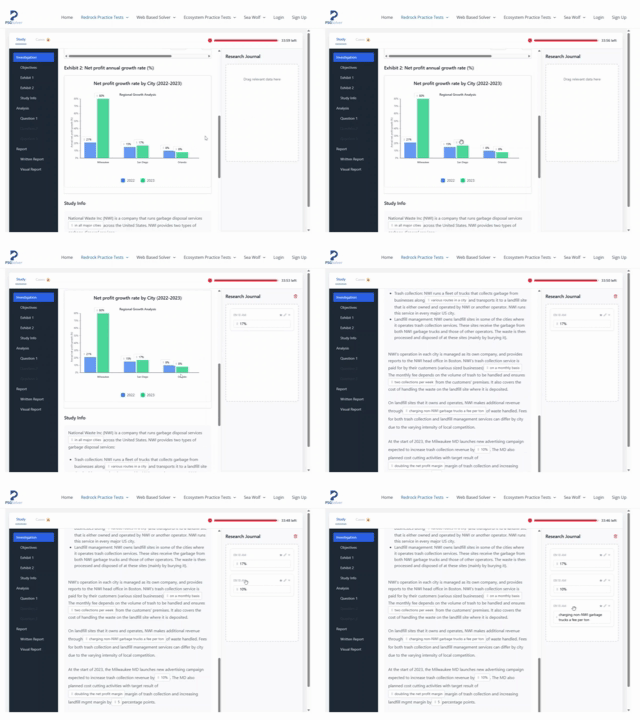
Redrock is the first scenario most candidates encounter. You’re presented with a structured research report and asked to answer a series of questions based on its data — percentage calculations, comparisons, and logical inferences drawn from tables and charts.
Accuracy matters: incorrect answers may incur negative marks, so a confident, systematic approach beats guessing. Candidates who practise with real past PSG data consistently report that familiarity with the report structure is one of the biggest advantages going in.
2. Sea Wolf — Ocean Cleanup
Sea Wolf — Ocean Cleanup
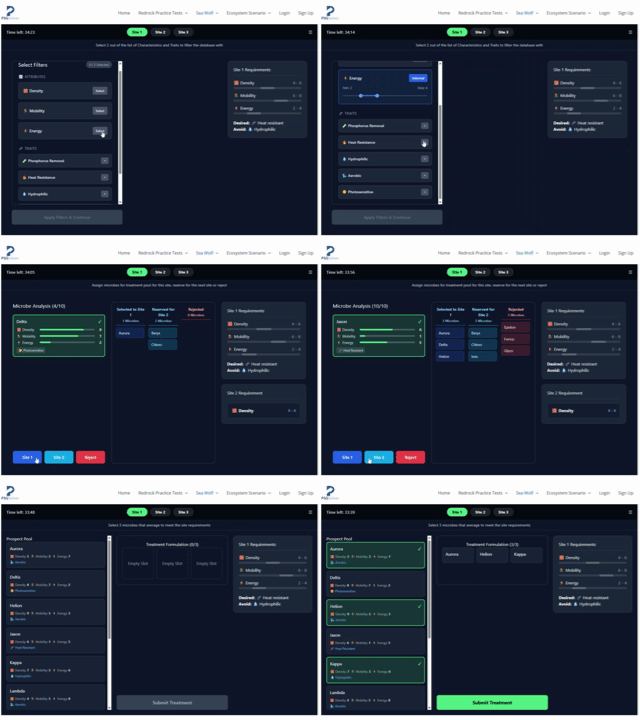
Sea Wolf was introduced in spring 2024 and has quickly become one of the most discussed modules. You’re tasked with designing microbial treatment plans for three ocean cleanup sites, selecting a combination of three microbes to match each site’s environmental conditions.
The scenario is played three times with different parameters, so adaptability and pattern recognition matter as much as understanding the rules on the first run.
3. Sustainable Futures Lab (SFL)
Sustainable Futures Lab
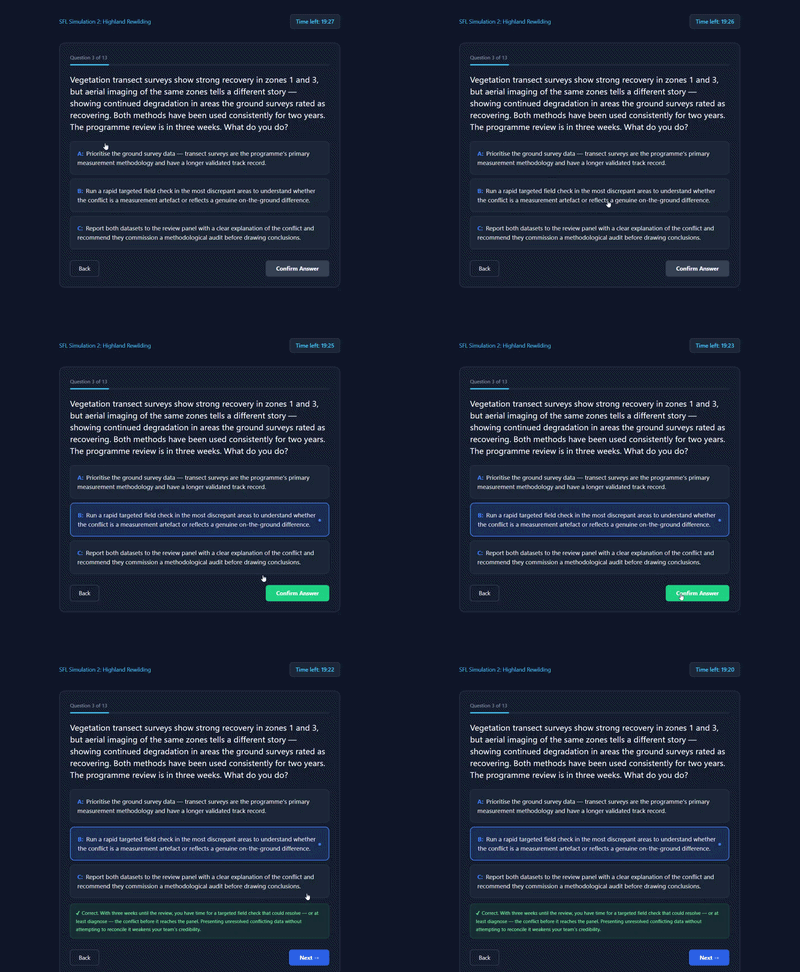
This is the biggest change to the PSG in 2026. Unlike Redrock and Sea Wolf, SFL is a behavioural assessment. You join a fictional environmental research team and make 13 sequential decisions under time pressure — prioritising tasks, responding to team members, navigating trade-offs.
McKinsey scores you across five dimensions: Prioritisation, Decision-making, Interpretation, Trade-off balance, and Teamwork. SFL is currently live in the US, UK, Germany, Middle East, Southeast Asia, and Canada, with global rollout in progress.
What About the Ecosystem Scenario?
Ecosystem Builder
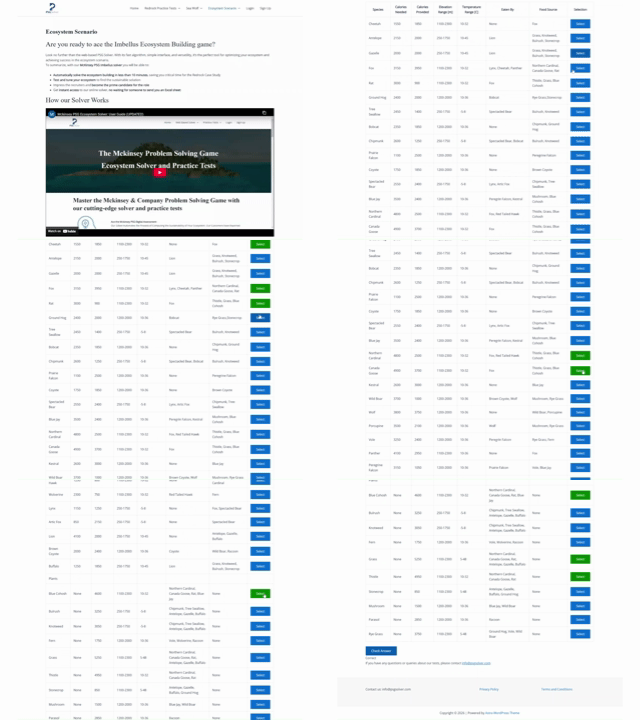
The Ecosystem Builder scenario — where you balance environmental conditions and predator-prey relationships to maintain a sustainable ecosystem — is no longer a core module in the standard 2026 PSG. However, some candidates are still assigned it depending on their cohort and region.
If you receive the Ecosystem scenario, it’s one of the most technically demanding modules, and timed practice on full simulations is the best way to get comfortable with its rules before test day.
What’s Been Retired
Before February 2023, McKinsey used a different set of game scenarios. These are no longer live but still appear in older guides and YouTube videos:
- Plant Defense — treating plant diseases while minimising ecosystem impact
- Disease Diagnosis — identifying unknown diseases from data
- Disaster Identification — classifying natural disasters and selecting relocation sites
If your preparation material references any of these, it’s outdated. The logic and data-processing skills transfer, but the specific mechanics do not.
Key Changes at a Glance
| Change | Detail |
|---|---|
| New module | Sustainable Futures Lab (SFL) added March 2026 |
| Assessment length | Now 65 or 85 minutes depending on test scenarios |
| Sea Wolf | Remains live since spring 2024 |
| Redrock | Stable format, updated data each cohort |
| Ecosystem | Still assigned to some candidates — worth preparing for |
| Retired scenarios | Plant Defense, Disease Diagnosis, Disaster ID — all retired pre-2023 |
How to Prepare for the 2026 PSG
The most effective preparation combines three things:
- Practise on real past data. The scenarios use consistent underlying logic, and candidates who train on authentic PSG data consistently outperform those who use generic aptitude tests.
- Drill each module separately. Sea Wolf and Redrock require different cognitive approaches. Master one at a time before combining them under timed conditions.
- Don’t neglect SFL. Because it’s new, many candidates underestimate it. McKinsey is deliberately assessing your judgement and team reasoning — not just your speed.
Ready to practise the 2026 PSG?
Practice tests for Redrock, Sea Wolf & SFL — plus Ecosystem for candidates still assigned it.